
 See Our Latest Article on HelloNation
Tension headaches often feel like steady pressure, tightness, or a band wrapped around the forehead. The discomfort may also extend into the temples, scalp, jaw, neck, and shoulders. Gentle stretching can help reduce muscle tension, especially when headaches are connected with prolonged sitting, screen use, stress, or an awkward sleeping position.
Stretching should feel mild and controlled. It should not cause sharp pain, dizziness, numbness, tingling, weakness, or a noticeable increase in head pain.
Which stretches may help a tension headache?
The most useful movements usually target the neck, upper back, shoulders, chest, and jaw. These areas can become tense when the head stays forward for long periods, such as during computer work, driving, reading, or phone use.
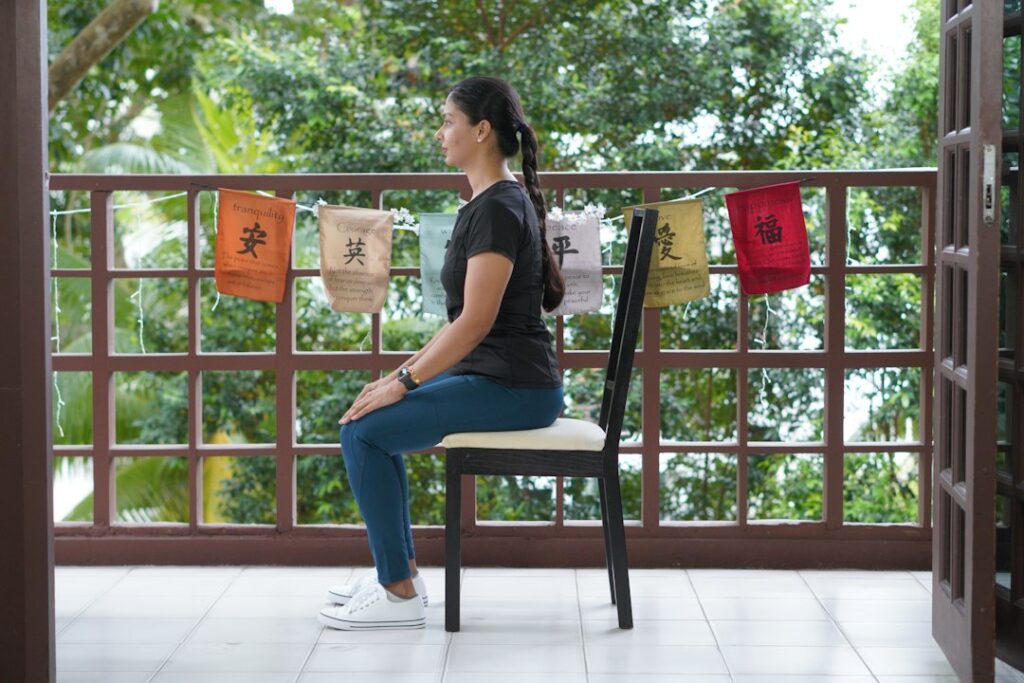
Try the following sequence in a quiet space. Sit upright with both feet supported or stand with your weight evenly distributed.
Chin tuck
A chin tuck gently activates the muscles that help support the neck.
- Keep your eyes facing forward.
- Draw your chin straight back, as though making a small double chin.
- Do not look down or force your head backward.
- Hold for 3 to 5 seconds.
- Relax and repeat 8 to 10 times.
This movement is especially useful after time spent looking down at a phone or laptop. The goal is alignment, not force.
Side neck stretch
This stretch targets the muscles along the side of the neck.
- Sit or stand tall with your shoulders relaxed.
- Slowly bring your right ear toward your right shoulder.
- Keep the opposite shoulder from lifting.
- Hold for 15 to 20 seconds.
- Return to the center and repeat on the other side.
A light hand can rest on the side of the head, but do not pull. If the stretch creates pain that travels into the arm, stop the movement.
Upper trapezius stretch
The upper trapezius muscles run from the neck toward the shoulders and often tighten during stress.
- Sit on one hand or hold the edge of a chair.
- Turn your head slightly toward the opposite side.
- Gently angle your nose toward the armpit.
- Hold for 15 to 20 seconds.
- Switch sides.
This should produce a mild stretch along the back and side of the neck. Avoid bouncing or rotating the neck quickly.
Levator scapulae stretch
This movement can help with tightness near the upper inner shoulder blade.
- Turn your head about 45 degrees to the right.
- Look down as though checking the right front pocket of your clothing.
- Keep the right shoulder relaxed.
- Hold for 15 to 20 seconds.
- Repeat on the opposite side.
The stretch should remain comfortable and localized. Stop if it causes shooting pain or unusual sensations.
What stretches help the shoulders and upper back?
Neck tension is often connected with the shoulders and upper back. Releasing those areas may make it easier to maintain a relaxed head and neck position.
Shoulder rolls
- Lift both shoulders gently toward the ears.
- Move them backward, then down.
- Complete 8 to 10 slow circles.
- Reverse direction for another 8 to 10 repetitions.
Keep the movement smooth. Shoulder rolls are useful during short breaks from desk work, household tasks, or long periods of driving.
Doorway chest stretch
Tight chest muscles can encourage the shoulders to round forward.
- Stand in a doorway with one forearm resting against the frame.
- Place the elbow around shoulder height.
- Step forward slowly until a gentle stretch is felt across the chest.
- Hold for 15 to 20 seconds.
- Repeat on the other side.
Do not force the shoulders backward. The purpose is to open the front of the chest without creating strain.

Upper-back reach
- Clasp both hands in front of the body.
- Reach forward while allowing the shoulder blades to spread.
- Keep the chin level and avoid collapsing the lower back.
- Hold for 15 to 20 seconds.
- Breathe slowly throughout the stretch.
This can be helpful after working at a kitchen table, sitting on a couch, or using a workstation that does not support an upright posture.
Can stretching help during an active headache?
Gentle stretching may help during a mild tension headache, but it is not appropriate to push through severe or unusual symptoms. Start with slow breathing, relaxed shoulders, and one or two easy movements rather than completing a vigorous routine.
A simple approach is:
1. Sit comfortably with both feet on the floor.
2. Inhale slowly through the nose.
3. Exhale longer than the inhale.
4. Perform five shoulder rolls.
5. Try one gentle neck stretch on each side.
6. Rest for a few minutes.
Heat from a warm shower or a comfortably warm cloth may also help tight neck and shoulder muscles. Some people prefer a cool cloth across the forehead. Use whichever feels soothing, and protect the skin from excessive heat or cold.
How often should these stretches be done?
Short, frequent sessions are generally more useful than a long routine performed only after pain begins. Consider moving for two to five minutes every 30 to 60 minutes during desk work, studying, screen use, or travel.
A practical daily routine may include:
- Five chin tucks
- Five shoulder rolls in each direction
- One side neck stretch per side
- One upper-back stretch
- Several slow breaths
Stretching should complement regular movement, adequate sleep, hydration, and breaks from close-up screen work. In colder months, people may spend more time indoors, use laptops from couches or beds, or remain in one position during long commutes. These habits can make neck and shoulder stiffness more noticeable.
What should be avoided?
Avoid fast neck circles, forceful pulling, bouncing, and stretches that produce pain. The neck does not need to be pushed to its maximum range to benefit from movement.
Pause the routine if symptoms include:
- Dizziness or loss of balance
- Blurred or double vision
- Numbness or tingling
- Weakness in an arm or leg
- Pain that travels sharply down an arm
- Nausea that is new or severe
- A sudden increase in headache intensity
Massage of the temples, scalp, neck, and shoulders may feel relaxing, but pressure should remain gentle. Jaw clenching can also contribute to head and neck tension, so allow the teeth to remain slightly apart while stretching.
When is a headache not suitable for home stretching?
Seek urgent medical attention for a headache that begins suddenly and severely, follows a head injury, or occurs with confusion, fainting, trouble speaking, loss of vision, significant weakness, fever with a stiff neck, or repeated vomiting.
A new pattern of frequent headaches, headaches that steadily worsen, headaches that repeatedly wake someone from sleep, or headaches requiring frequent pain medicine deserves medical evaluation. Recurrent symptoms may have causes other than ordinary muscle tension, including migraine, medication overuse, sleep problems, eye strain, jaw disorders, or other health conditions.
For ordinary tension-related discomfort, gentle neck and shoulder mobility can be a useful self-care measure. The safest routine is slow, comfortable, and consistent rather than intense.
